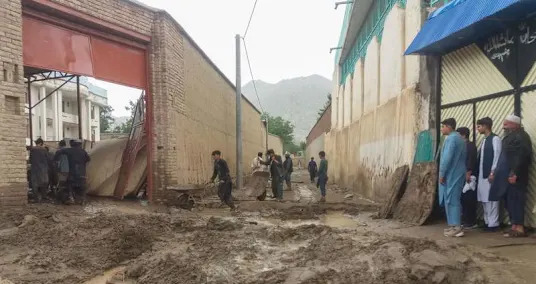
At least 61 people have been killed and 116 injured across Afghanistan since March 26 due to heavy rainfall, floods, landslides and lightning strikes, the Afghan government said on Saturday.
At least four people were still missing after floods affected thousands of families and damaged 2,448 houses, Afghan government spokesman Zabihullah Mujahid said in a post on X.
In addition, thousands of hectares of cropland was also destroyed, posing serious risks to rural communities who rely on agriculture for their livelihoods.
Deadly flooding has struck Afghanistan repeatedly in recent years, causing significant loss of life, injuries and widespread damage to homes, infrastructure and agricultural land.
Extreme weather events such as flash floods and droughts are increasing in Afghanistan, which experts link to the climate crisis.
Despite having a negligible carbon footprint, the country ranks among the most climate-affected nations and remains ill-prepared to cope after decades of conflict, poor infrastructure and a struggling economy, compounded by recent earthquakes and severe flooding.
latest_posts
- 1
 Best bar-b-que Style: Which One Is Your Number one?
 - 2California officials warn against foraging wild mushrooms after deadly poisoning outbreak
- 3Israel reports first missile fire from Yemen since start of Iran war
- 4Drones haven't won the fight in Ukraine. That matters as the West learns new ways of war.
- 5Czech Republic's new premier: No money for Ukraine




- I watched the buzzy new AI documentary — and left feeling both hopeful and terrified
- Oldest evidence of human fire-making discovered at site in England
- Journalists killed by Israeli strike in southern Lebanon
- When darkness shines: How dark stars could illuminate the early universe
- Home Plan Tips for Seniors
- ‘RuPaul's Drag Race’ Season 18: How to watch without cable, premiere time, cast list and more
- Vote in favor of the subject that you see as generally captivating and intelligent!
- Israel scales back use of top missile interceptors as Iran barrages persist
- How Mars' ancient lakes grew shields of ice to stay warm as the Red Planet froze